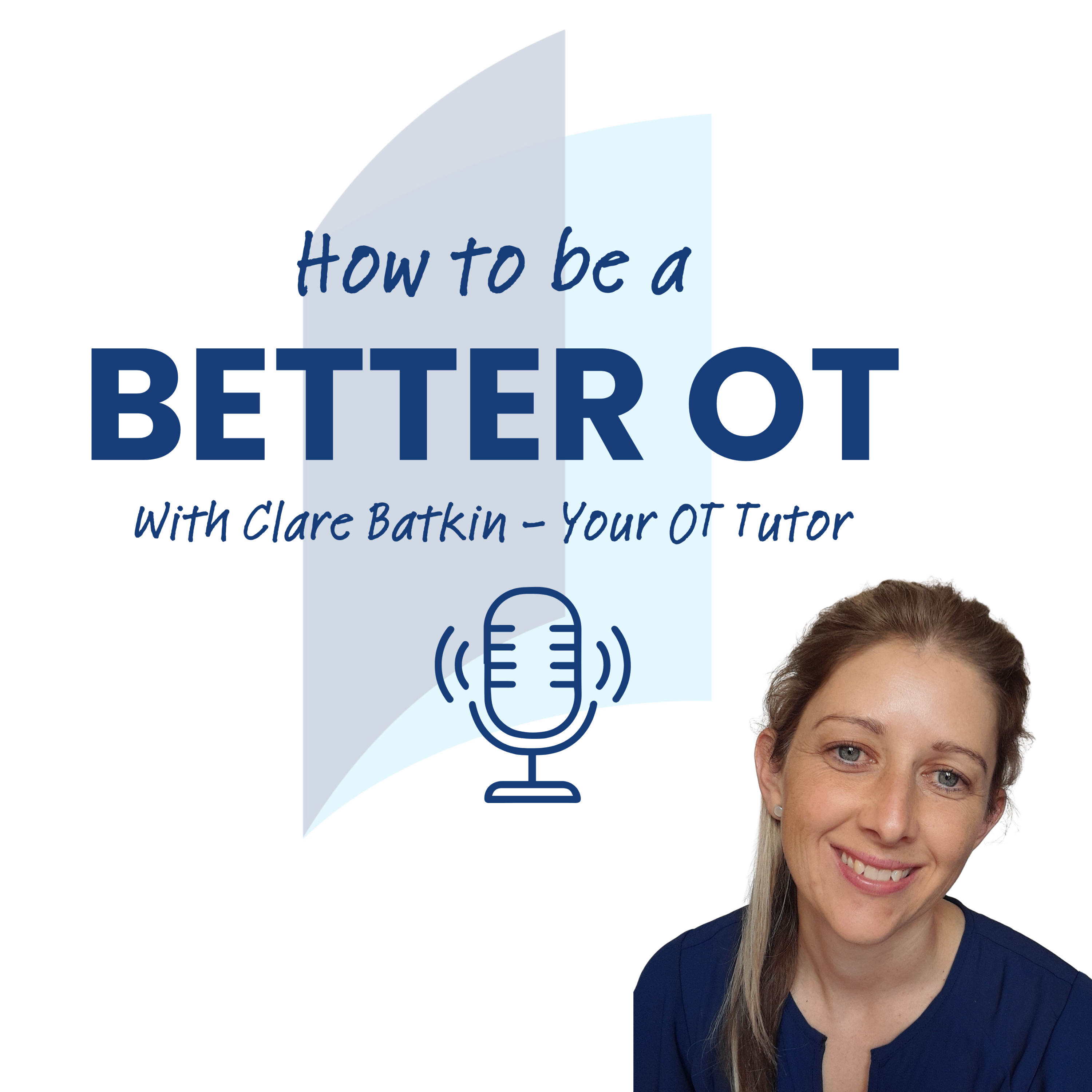
Host


Struggling to write long, complex OT reports without working unpaid hours? Or finding that your funding requests keep getting knocked back? Discover 5 essential principles to streamline your report writing, manage referrer expectations, and clearly articulate your client's support needs.
Episode Summary: In the Series 2 premiere of the How to Be a Better OT podcast, host Clare Batkin moves into a brand-new series focused on solving the most requested clinical topics. Kicking off with report writing – a vital skill for OTs working in the NDIS, aged care, and private practice – Clare shares 5 key tips to elevate your reports. Learn how to clarify the "functional why," gather robust multi-source data, write clear impairment-focused descriptions, format for busy readers, and apply the PEO model to your own writing routine.
Key Takeaways:
- Clarifying Purpose & Expectations: Why you must understand why an FCA or AT report is needed and how to manage referrer expectations when available funding hours are limited.
- Information Gathering That Makes or Breaks Your Report: Why relying solely on client interviews isn't enough. Discover how to incorporate carer feedback, MDT reports, and creative functional observations.
- Describing Function Clearly: The 4 critical elements every description must include (data source, quantification, assistance needed, and risks). Learn why NDIS reports require an impairment-focused approach over strengths-focused language, and why the word "independent" should be used with extreme caution.
- Formatting for Busy Readers: How to make 15+ page reports skimmable for NDIA planners using section subheadings, hyperlinked tables of contents, dot points, footnotes/endnotes, and an executive summary.
- Applying the PEO Lens to Your Writing: How analysing your Person factors (working in short bursts vs. half-day blocks), Environment factors (office body-doubling vs. quiet work-from-home days), and Occupation factors (brain-dumping function before writing recommendations) can eliminate writing overwhelm.
Links & Resources Mentioned:
- Freebie Tutorial: Watch the YOTT Tutorial: NDIS Report Writing in the Learning Library or via YouTube and see visual examples of how to describe your clients function.
- Freebie Download: Access the Executive Summary Example Template from the Learning Library.
- Blog Post: Read the guide on applying the PEO Approach to Report Writing.
- Course: Enrol in The OT Guide to Completing a Functional Capacity Assessment online course.
- Course: Learn how to capture and report capacity building progress in the online course Measuring Outcomes to Prove Our Value.
- Deep Dive: Access functional assessment tutorials inside the Connector Membership or Skills for OT CPD Bundle.
- Template: Purchase the white-labelled FCA Report Template.
- 1:1 Support: Book a private 1:1 report review or Zoom consultation directly with Clare.
If you found these report writing tips helpful, please subscribe, leave a review, and share this episode with a colleague! Be sure to tune in next time for Episode 2 of Series 2, where we will cover how to choose and use standardised assessments across any clinical setting.
Want to continue learning with Clare? Here are your options:
Check out my FREE Learning Library full of resources and courses
Sign-up for one-on-one or group training and support
Book a time for a chat to see how I can help
Sign-up for a Your OT Tutor membership
Follow me on social media – vist my Linktree for the links you need!
No transcript available for this episode.
Necessary cookies keep the Hub working. Analytics cookies are off unless you turn them on.
Privacy policy